Yinlun Puts $38 Million into a New Mexico Plant
Core Event & Key Data
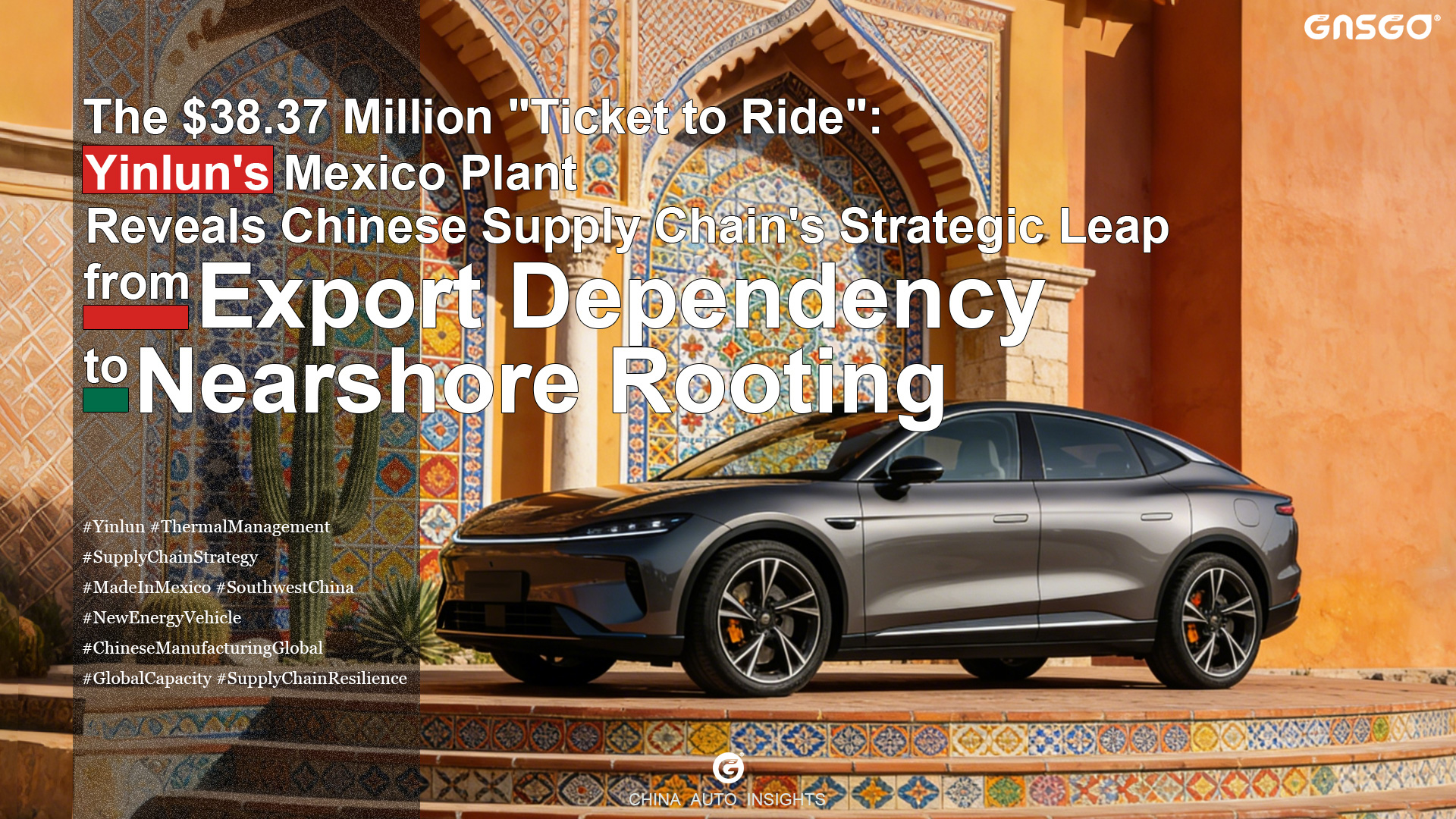
Key Investment: Zhejiang Yinlun Machinery Co., Ltd. recently announced a capital increase of $38.37 million for its newly established subsidiary in Mexico, with all funds dedicated to constructing a local production base. This marks Yinlun’s first scaling manufacturing capacity layout in the region, following its North American offices and warehousing centers.
Strategic Intent: The announcement explicitly states the investment aims to “enhance the company’s OEM and service capabilities in the North American region,” leveraging Mexico’s geographical advantages to better serve local customers and optimize global supply chain deployment in response to growing localization demands in the North American market.
Contextual Contrast: Notably, Yinlun also announced a RMB 378 million capital increase for its Sichuan subsidiary on the same day. The parallel strategic prioritization of the Mexico investment alongside a major domestic expansion project signals that Yinlun’s globalization has entered a new “manufacturing Overseas” phase.
Industry Insights
For Supply Chain Companies: Yinlun’s Mexico investment reveals a harsh and clear new rule: being excellent solely in China is no longer sufficient to secure a long-term seat at the global table. For companies aspiring to become global leaders, localized manufacturing capabilities in key markets are rapidly evolving from a “competitive advantage” to a “prerequisite for market access.” Those who can successfully redefine their identity from “Chinese exporter” to “regional manufacturer” in core markets like North America and Europe will seize the initiative in the next round of global supply chain restructuring.
For OEMs: As more Yinluns establish manufacturing nodes worldwide, the overall morphology of China’s automotive supply chain is undergoing a fundamental transformation—from a “single-core radiation model” concentrated domestically to a “multi-hub networked model” distributed globally. This evolution provides far-reaching supply chain support for OEMs’ global expansion, while simultaneously requiring them to manage this increasingly complex globalsupply network with a more systematic perspective.
Yinlun MadeInMexico Nearshoring NorthAmericaAutoMarket ChineseManufacturingGlobal ThermalManagement GlobalCapacity USMCA AutoParts