China's Tyre Industry Passes 200 Million Units Abroad
Core Data/Events
-
Since establishing its first overseas factory in Southeast Asia in 2016, the Chinese tire industry’s actual overseas production capacity has exceeded 200 million units. Overseas capacity accounts for over 35% of semi-steel tire capacity, becoming a key pillar of the production structure.
-
In 2025, Southeast Asia has surpassed Europe to become the world’s second-largest tire production hub. Future planned capacity additions for semi-steel tires are nearly 100 million units, primarily focused on Southeast Asia and Africa.
-
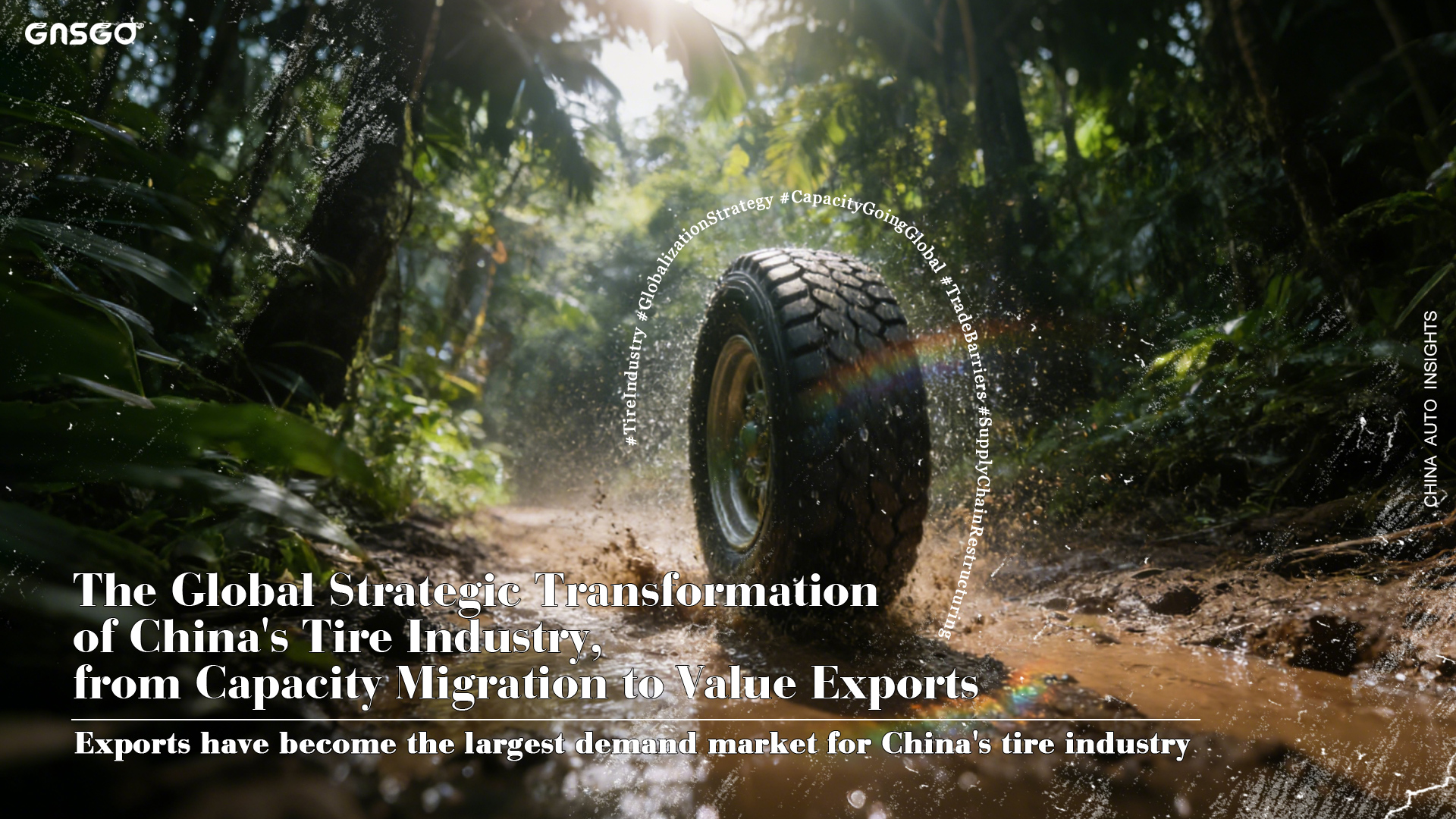
Exports have become the largest demand market for China’s tire industry, accounting for 44% of domestic all-steel tire production and 50% of semi-steel tire production.
In-Depth Analysis
-
The Maturation and Challenges of the “China + Overseas” Dual-Cycle Capacity Model,Leading companies represented by Sailun and Linglong have successfully built a global capacity matrix of “domestic mother base + overseas satellite factories.” Overseas factories are close to markets, improving supply chain response speed; domestic bases focus on R&D and production of high-end, high-value-added products.
-
The Strategic Upgrade Tipping Point: From “Capacity Export” to “Value Export”.The industry as a whole remains in a state of “high share, low brand,” with OEM for international brands or competing on cost-effectiveness in the mid-to-low-end market as the primary model.
-
It is essential to leverage the established global production network to upgrade “Made in China” to “Intelligently Made in China” and “Chinese Brands.” This means, following the path of Japanese and Korean companies, continuously investing in R&D (e.g., green tires, smart tires), leading or participating in international standard setting, and building a high-value brand image of technological leadership, safety, and reliability in the minds of global consumers through sports marketing,OEM, etc.
Industry Insights
-
The next round of competition is about “global operational capability.” The decisive factor will not be who has more overseas factories, but who possesses superior global resource integration capabilities. This includes: sophisticated management of transnational supply chains, building localized talent teams,insights into different market consumption cultures, and the organizational ability to synergize global R&D, production, and marketing networks into an efficient machine.
-
Industrial upgrade must synchronize with brand dimension elevation. Technological breakthroughs (e.g., liquid gold technology) and green products (low-carbon tires) are the “hard power” to break the value ceiling, but they must be transformed into market recognition and premium pricing power through sustained brand building.
TireIndustry GlobalizationStrategy CapacityGoingGlobal TradeBarriers SupplyChainRestructuring BrandUpgrade IndustryInsights