Latin America's EV Share Doubles as Tesla Stays Away
Core Data/Events
-
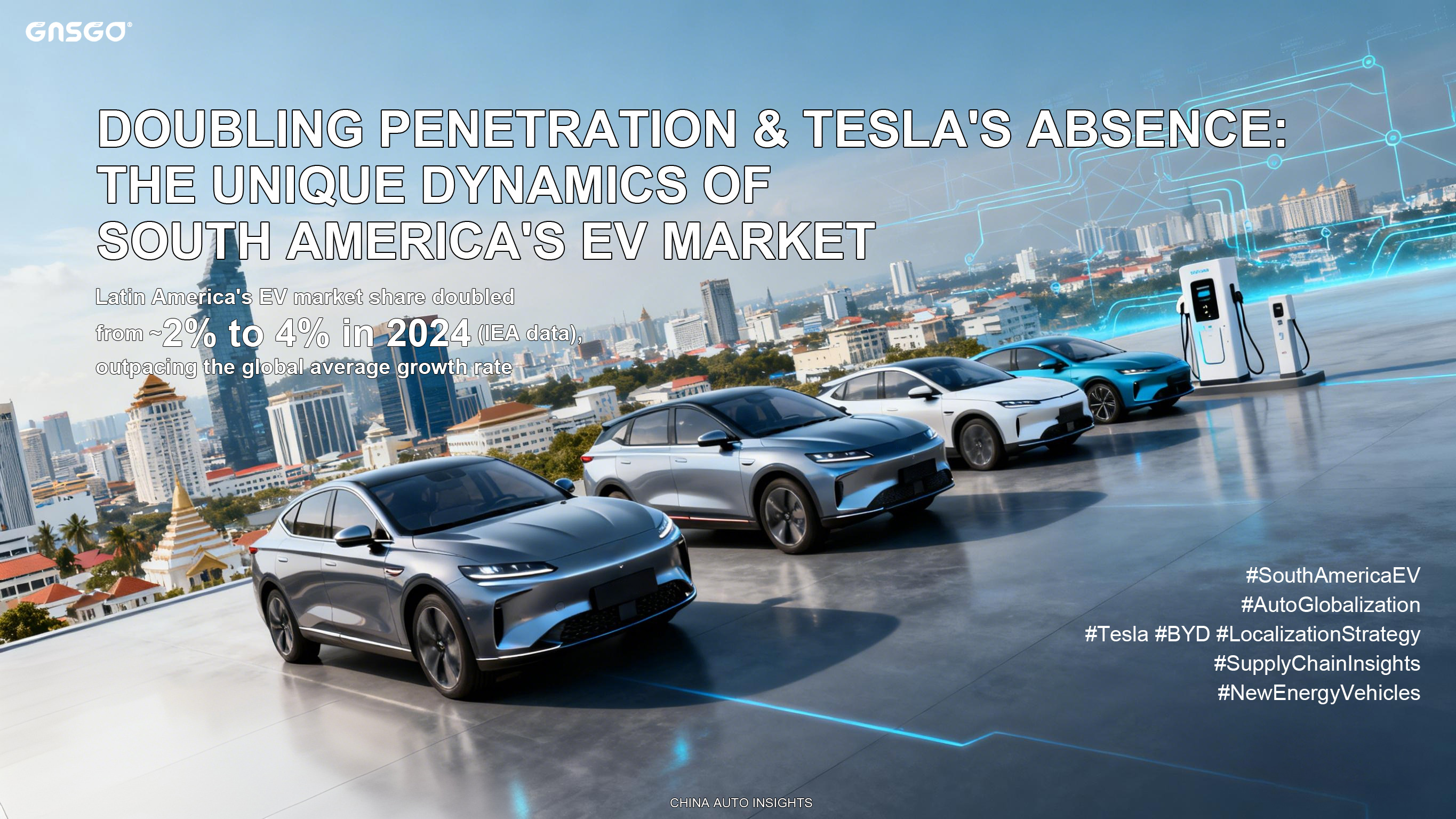
Rapid Regional Growth: Latin America’s EV market share doubled from ~2% to 4% in 2024 (IEA data), outpacing the global average growth rate.
-
Record National Penetration: Uruguay’s EV share in new cars reached 28% in Q3 2025; Chile (10.6%) and Brazil (9.4%) also hit record highs.
-
Brazil Leads in Volume: With over 125,000 EV sales in 2024, accounting for 6% of its passenger vehicle market, Brazil is the region’s largest single market.
In-Depth Analysis The Triad Behind Tesla’s Absence: Price, Network, and Product Mismatch
-
Price Gap: In Peru, mainstream EV models are priced at around 60% of a Tesla’s cost, exceeding the market’s tolerance for brand premium.
-
Network Void: Aside from tentative steps in Chile, Tesla lacks official showrooms and charging infrastructure, undermining sales and service capabilities.
-
Scenario Misalignment: Strong consumer preference for HEV/PHEVs (a large share in Brazil) and electric pickups for SMEs creates a mismatch with Tesla’s pure-EV, premium sedan-focused lineup.
Market-Driven Forces: The “Economic Case” Trumps Green Narratives
-
Lower Acquisition Cost: Chinese and legacy automakers offer affordable, well-equipped models, transforming EVs from “symbols” to “practical choices.”
-
Clear TCO Advantage: In a context of high fuel prices, urban commuting costs for charging and maintenance are significantly lower than for gasoline cars, driving pragmatic consumer switching.
Industry Insights
-
South America validates the universality of the “value-for-money + localized operation” model. Success hinges not on cutting-edge tech but on providing a total solution that is “affordable to buy, use, and maintain.” Deep localization and tailored product definitions (e.g., HEVs, pickups) are core to long-term competitiveness.
-
Focus on the leapfrog development opportunities in “follower markets.” South America is skipping some traditional stages, directly embracing diverse electrification paths. Significant latent demand exists in charging infrastructure, battery recycling, and localized component supply.
Facing Brazil’s potential 35% import tariff, should Chinese brands prioritize “local production” or “partnerships with local automakers”? SouthAmericaEV AutoGlobalization Tesla BYD LocalizationStrategy SupplyChainInsights NewEnergyVehicles