China's New European Strategy via Spain's Auto 2030 Plan
Core Data/Events
-
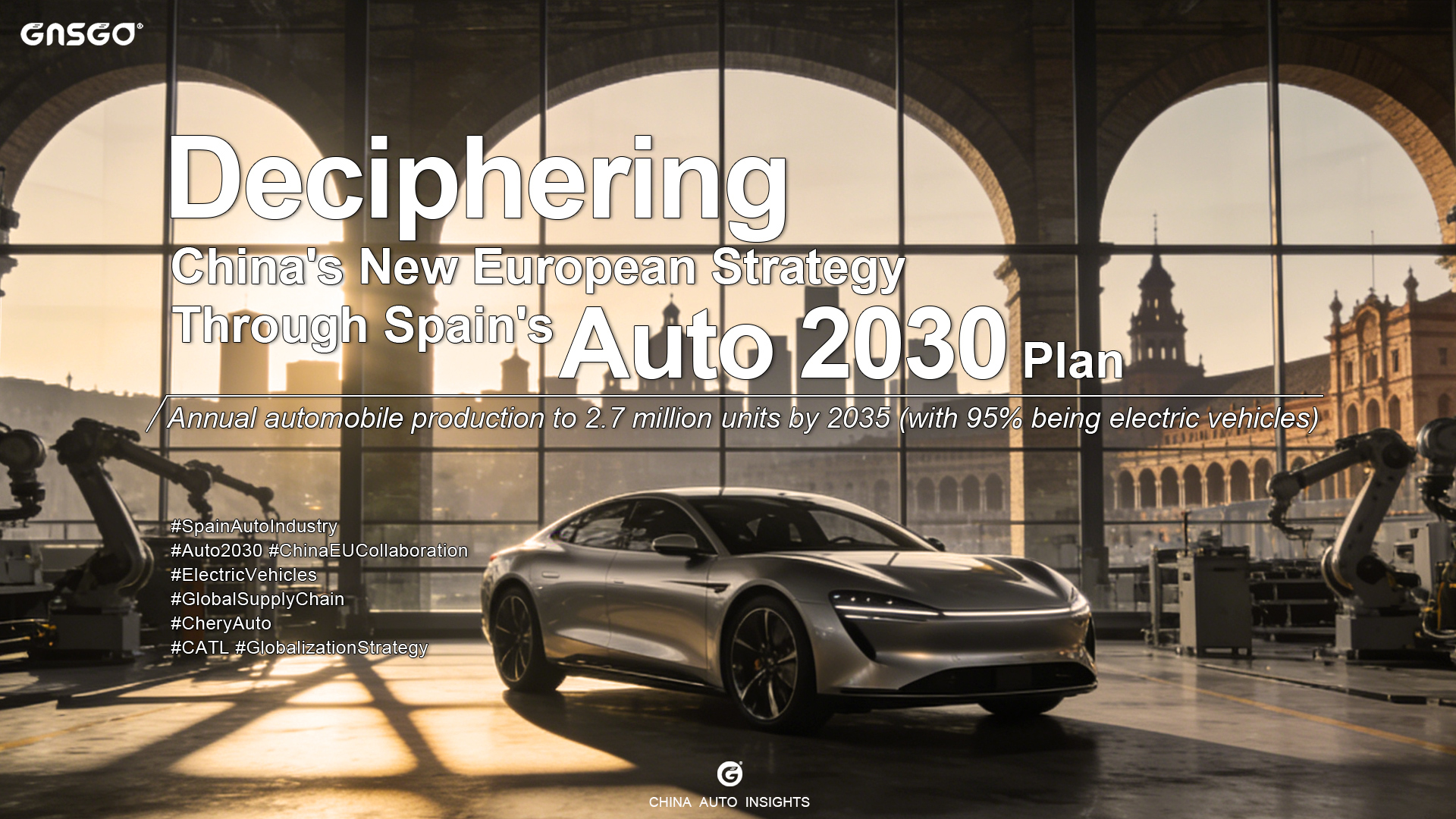
The Spanish government’s recently released ‘Auto 2030’ plan aims to establish the country as a core hub for European electrification. Key targets include increasing annual automobile production to 2.7 million units by 2035 (with 95% being electric vehicles) and building a complete domestic battery industry chain with a capacity of 200GWh.
-
The total planned investment is estimated at 36-39 billion euros, accompanied by policies like accelerated approvals and special subsidies. Analysis indicates that Spain’s ambitions depend on Chinese participation. Recently, Chery resumed production of the EBRO brand in Barcelona, Leapmotor announced it will produce new cars through Stellantis’ Spanish factory, and CATL is jointly building a battery factory in Zaragoza with Stellantis, all having already taken the first steps.
In-Depth Analysis
- In Spain, the Chinese automotive industry is demonstrating a more sophisticated and politically astute Globalization 2.0 model that goes beyond simple exports or factory construction. Similar to the path taken by Japanese automakers in the last century to address trade frictions, Chinese automakers are integrating deeply into Europe through localization.
◎Model 1: Exemplified by the Chery-EBRO project. Instead of building a new factory, Chery infused the dormant Spanish brand EBRO with its electric platform and technology, utilizing its existing factory and brand assets to quickly achieve localized production and job creation. ◎Model 2: Represented by the Leapmotor-Stellantis and CATL-Stellantis collaborations. Leapmotor will produce locally (CKD/SKD) through Stellantis’ existing Spanish factory, instantly gaining access to mature capacity, parts supply, and dealer networks. CATL’s joint venture battery factory with Stellantis secures core orders for millions of future EVs.
Industry Insights
-
Spain’s plan provides a clear timetable for production capacity and battery self-sufficiency, while policy windows like the EU’s Carbon Border Adjustment Mechanism (CBAM) are tightening. Chinese companies aiming for a favorable position in the value chain must act swiftly.
-
Future cooperation should not be limited to the isolated landing of battery or vehicle factories. Visionary companies should promote the formation of clusters involving China’s leading charging operators, smart connectivity solution providers, and battery recyclers alongside vehicle and battery investments, building a miniature yet complete Chinese new energy industrial ecosystem in Spain to form systemic competitiveness that is difficult to replace.
SpainAutoIndustry Auto2030 ChinaEUCollaboration ElectricVehicles GlobalSupplyChain CheryAuto CATL GlobalizationStrategy