Tesla Shanghai Passes 4 Million Cars in 14 Months
Core Data/Events
-
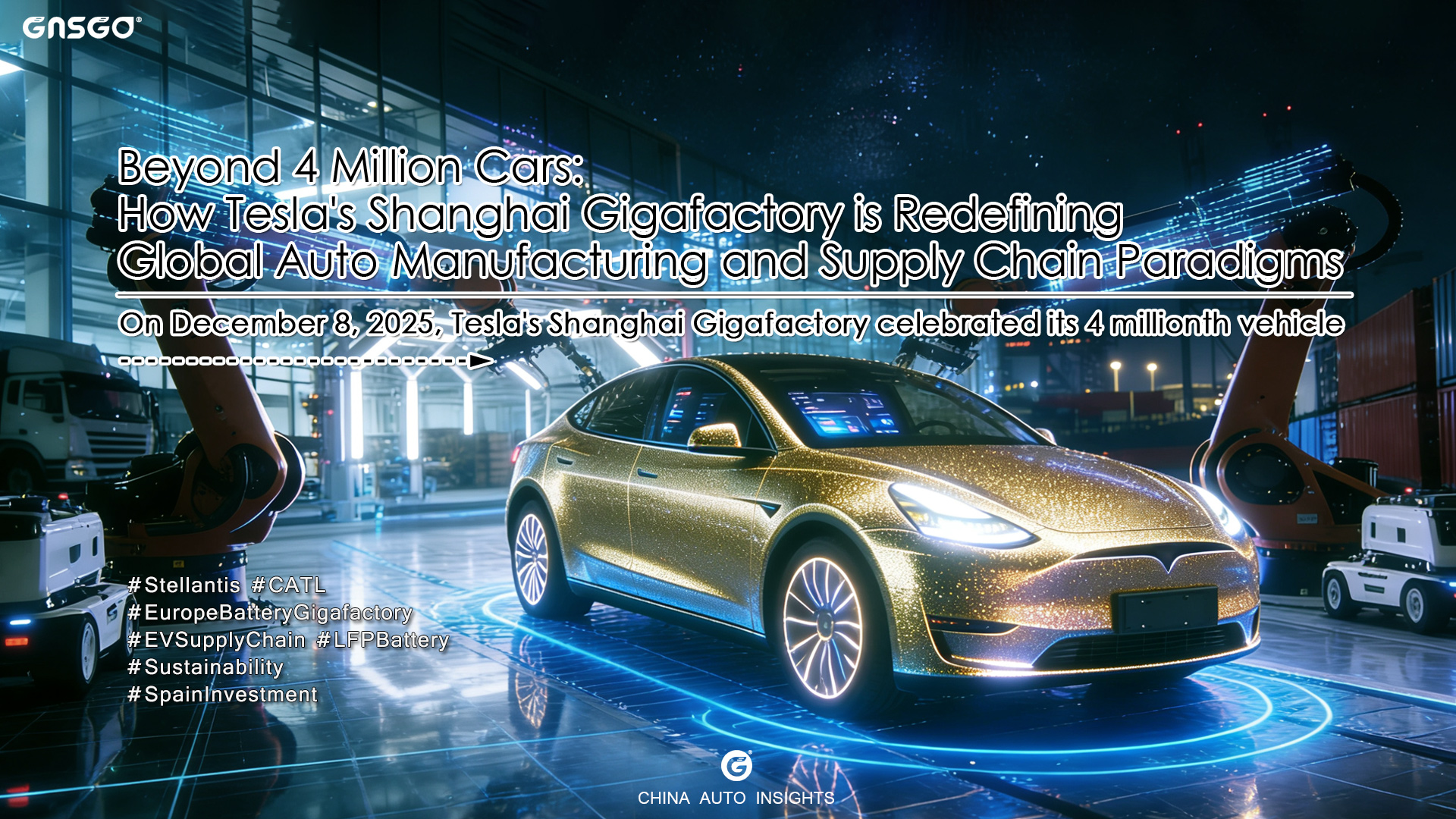
On December 8, 2025, Tesla’s Shanghai Gigafactory celebrated its 4 millionth vehicle (a Starlight Gold Model Y L) rolling off the production line. The leap from 3 million to 4 million units took only about 14 months, setting a new efficiency record.
-
The factory contributes nearly half of Tesla’s global EV deliveries, solidifying its role as the core production and export hub.
-
The localized supply chain ratio exceeds 95%, involving over 400 Chinese Tier-1 suppliers. More than 60 of these have entered Tesla’s global supply system, creating a highly efficient “4-hour industrial circle” in the Yangtze River Delta region
In-Depth Analysis
-
The essence of the “Tesla Speed” is not merely swift construction but the systemic capability output of China in institutional innovation, industrial collaboration, and government services. The achievement of “starting construction, commencing production, and making deliveries all within the same year” in 2019 is a prime example.
-
The 95% localization rate at the Shanghai factory is not a static metric but a dynamic engine for industrial upgrading. By integrating hundreds of local suppliers into its global quality and technology system through stringent standards, it has elevated over 60 of them to global supplier status
-
The Shanghai factory’s role transcends that of a traditional “overseas plant.” It is both the single most efficient and cost-optimal factory within Tesla’s global network and a global export center serving Europe and Asia. This demonstrates a new paradigm of globalization: establishing a deeply vertically integrated gigafactory in the most competitively advantageous region (China), leveraging its full industrial cluster effect for ultimate efficiency, and then serving multiple regional markets.
Industry Insights
-
For companies seeking to establish operations in China or collaborate with its supply chain, it is crucial to recognize that the greatest opportunity lies not just in land and labor, but in the comprehensive industrial ecosystem and institutional environment that supports the rapid iteration of high-end, complex manufacturing.
-
The success of Tesla and its local suppliers demonstrates that OEMs, by opening standards, sharing technology, and providing stable orders (with payment cycles reportedly shortened to around 90 days), can deeply empower and secure high-quality supply chains, enhancing global competitiveness together.
Tesla MadeInChina Gigafactory SupplyChainManagement ElectricVehicles Manufacturing Globalization IndustryInsights