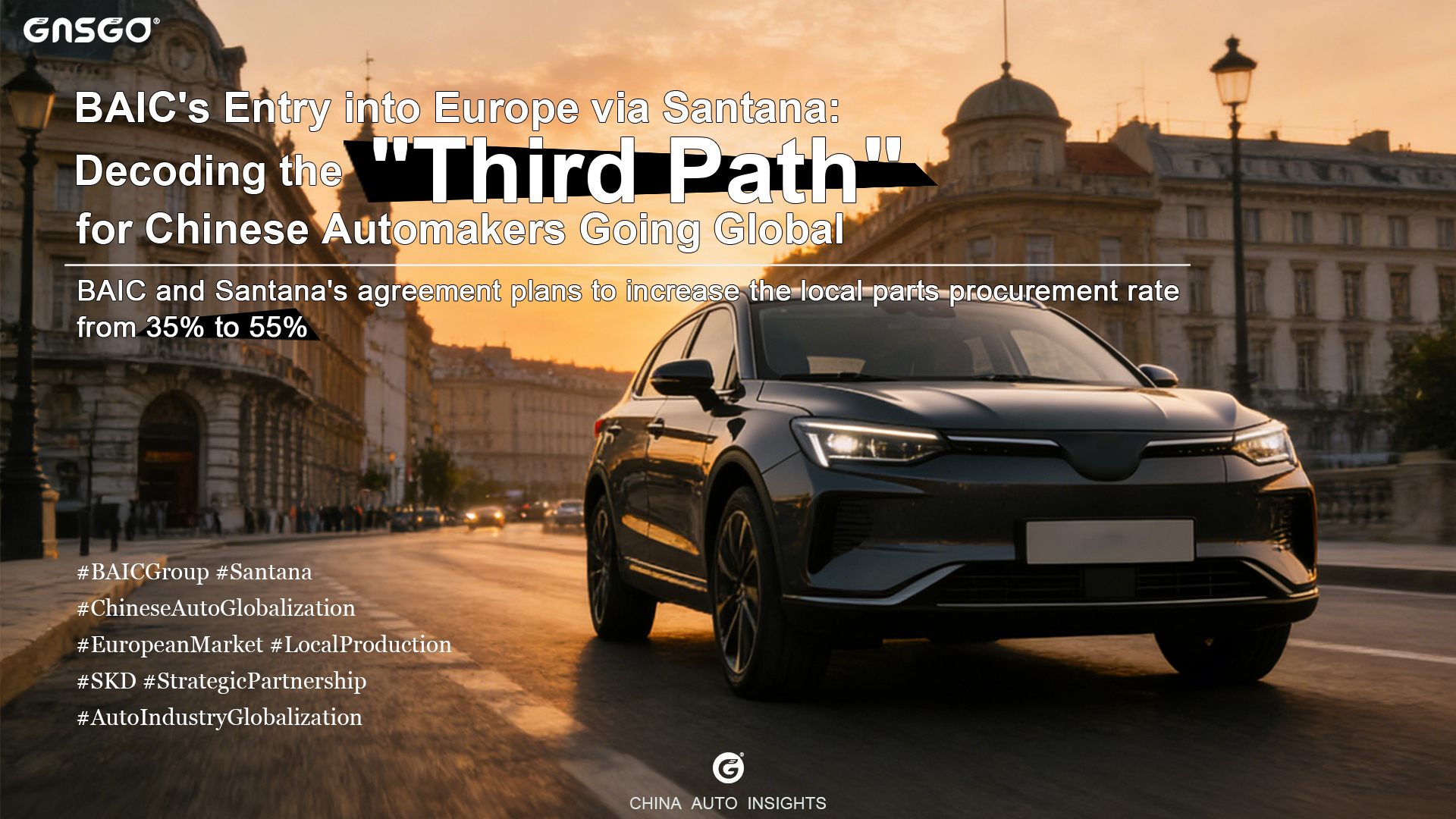
BAIC's Entry into Europe via Santana: A Third Path
Core Data/Events
Cooperation Restart: In December 2025, the factory of the long-dormant Spanish off-road manufacturer Santana Motors in Linares officially resumed operations after 14 years. The restart was facilitated by a joint investment of 5 million euros from BAIC Group, Zhengzhou Nissan, and Anhui CAROTE .
Cooperation Model: BAIC and Santana have established a long-term partnership. Over the next three years, five SUV models based on BAIC’s platforms (including models like the BJ40 and BJ30) will be shipped to the Spanish plant in SKD (Semi-Knocked Down) form for assembly and sold in Europe under the Santana brand.
Strategic Goal: The two parties have set a target to sell 30,000 vehicles in Europe within three years. This model can reduce the tariff for vehicles entering Europe from approximately 30% for fully built imports to about 3%-10%
Industry Insights
The next phase of global competition will test capabilities in “model innovation” and “resource integration.” The key to future success lies not only in powertrain technology but also in the ability to flexibly and cost-effectively integrate global resources like production capacity, brands, and channels. The BAIC-Santana case demonstrates that combining “technology for market access” with “capital revitalizing assets” creates powerful synergies, offering a replicable model for followers.
The meaning of “localization” is deepening, evolving from “production localization” to “value network localization.” To address EU scrutiny over “pseudo-localization,” BAIC and Santana’s agreement plans to increase the local parts procurement rate from 35% to 55% . This indicates that successful globalization must build a deep value network encompassing local R&D adaptation, local sourcing, and local employment. Only then can companies move from “compliance” to “integration,” truly taking root in the market.
The narrative of Chinese automotive globalization needs an upgrade from “cost disruption” to “value co-creation.” This cooperation was welcomed by local Spanish authorities for creating jobs . This reminds us that Chinese automakers’ overseas image building should emphasize how they empower local industries, create employment, and preserve brand heritage, rather than solely exporting cost-effective products. Crafting a compelling “co-creation story” of mutual benefit is crucial for mitigating geopolitical pressure and securing long-term social license.
BAICGroup Santana ChineseAutoGlobalization EuropeanMarket LocalProduction SKD StrategicPartnership AutoIndustryGlobalization